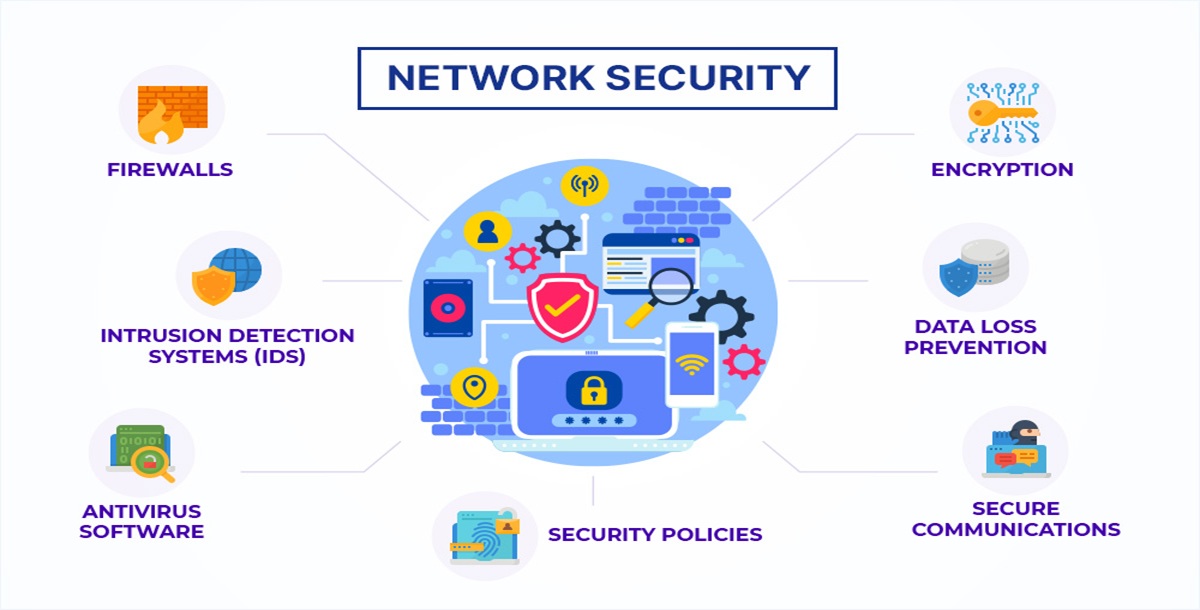
Network security is the practice of protecting your organization’s computer networks and data from unauthorized access, cyberattacks, and potential threats. With the increasing sophistication of cybercriminals, securing your network infrastructure is essential to safeguard sensitive information and ensure business continuity.
A comprehensive network security strategy involves a combination of hardware, software, and policies designed to prevent, monitor, and respond to potential security breaches.
1. Protection Against Cyber Threats
Network security safeguards your organization from a wide range of cyber threats, including hacking, malware, ransomware, and phishing attacks. By implementing strong security measures, you can prevent unauthorized access and keep your systems safe from malicious activities.
2. Data Protection and Privacy
With effective network security, sensitive business data and customer information are encrypted and protected from potential breaches. This ensures that your data remains confidential and helps maintain customer trust and privacy.
3. Reduced Risk of Financial Loss
A security breach can result in significant financial losses, including data recovery costs, legal fees, regulatory fines, and damage to reputation. Network security helps minimize these risks by proactively defending against attacks, saving your organization from costly consequences.
4. Business Continuity
Network security ensures that your business operations are uninterrupted and resilient to cyberattacks. By protecting your critical infrastructure, you reduce the chances of downtime, ensuring that your services are always available to your customers.
5. Compliance with Regulatory Standards
Many industries are governed by strict data protection and security regulations, such as GDPR, HIPAA, and PCI-DSS. Effective network security helps your organization meet compliance requirements, avoiding penalties and maintaining a good standing with regulators.
6. Improved Employee Productivity
With secure network access, employees can work without the fear of their systems being compromised. Network security allows your team to safely access resources, collaborate, and communicate, increasing productivity and operational efficiency.
7. Enhanced Trust with Customers and Partners
Demonstrating a commitment to network security builds trust with your customers and business partners. When they know their data is protected, they are more likely to engage with your organization and maintain long-term relationships.
8. Prevent Data Breaches and Identity Theft
Network security helps prevent unauthorized access to personal and financial information, reducing the risk of identity theft and data breaches. This is essential for protecting both your customers and your organization’s reputation.
9. Real-Time Threat Detection and Response
With advanced network monitoring tools, network security enables real-time threat detection, allowing for quick identification and response to any suspicious activity. This proactive approach helps mitigate potential attacks before they cause significant damage.
10. Scalability and Flexibility
As your business grows, network security solutions can scale with your needs. This flexibility allows your organization to expand its infrastructure while maintaining a high level of security across all systems and devices.
By investing in robust network security, your organization can defend against emerging cyber threats, protect sensitive data, and ensure that business operations run smoothly and securely. Network security is a critical component in fostering a safe and reliable environment for both your internal teams and external stakeholders.
